
Our work in sustainable construction has provided clear insights into the potential of bio-based materials. We’ve seen firsthand how adopting Eco-Friendly Building Materials (Hempcrete, Timber-crete) can reshape building practices. This approach is not just about environmental responsibility; it’s about creating more durable, healthier structures. The industry is slowly shifting, moving away from conventional methods towards more ecological alternatives that offer long-term value.
Overview
- Eco-Friendly Building Materials (Hempcrete, Timber-crete) are gaining traction for their sustainability and performance benefits.
- Hempcrete, a lightweight insulation and infill material, offers excellent thermal performance and moisture regulation.
- Timber-crete provides structural stability and insulation, utilizing recycled wood particles.
- These materials contribute to improved indoor air quality and reduced carbon footprints in buildings.
- Practical experience shows these materials are viable alternatives to traditional construction components.
- Adoption in the US is growing, driven by a demand for greener, healthier homes and commercial spaces.
- Addressing initial costs and material availability remains key to wider integration into building projects.
- Regulatory frameworks are slowly adapting to support these innovative building solutions.
The Practicality of Eco-Friendly Building Materials (Hempcrete, Timber-crete) in Modern Construction
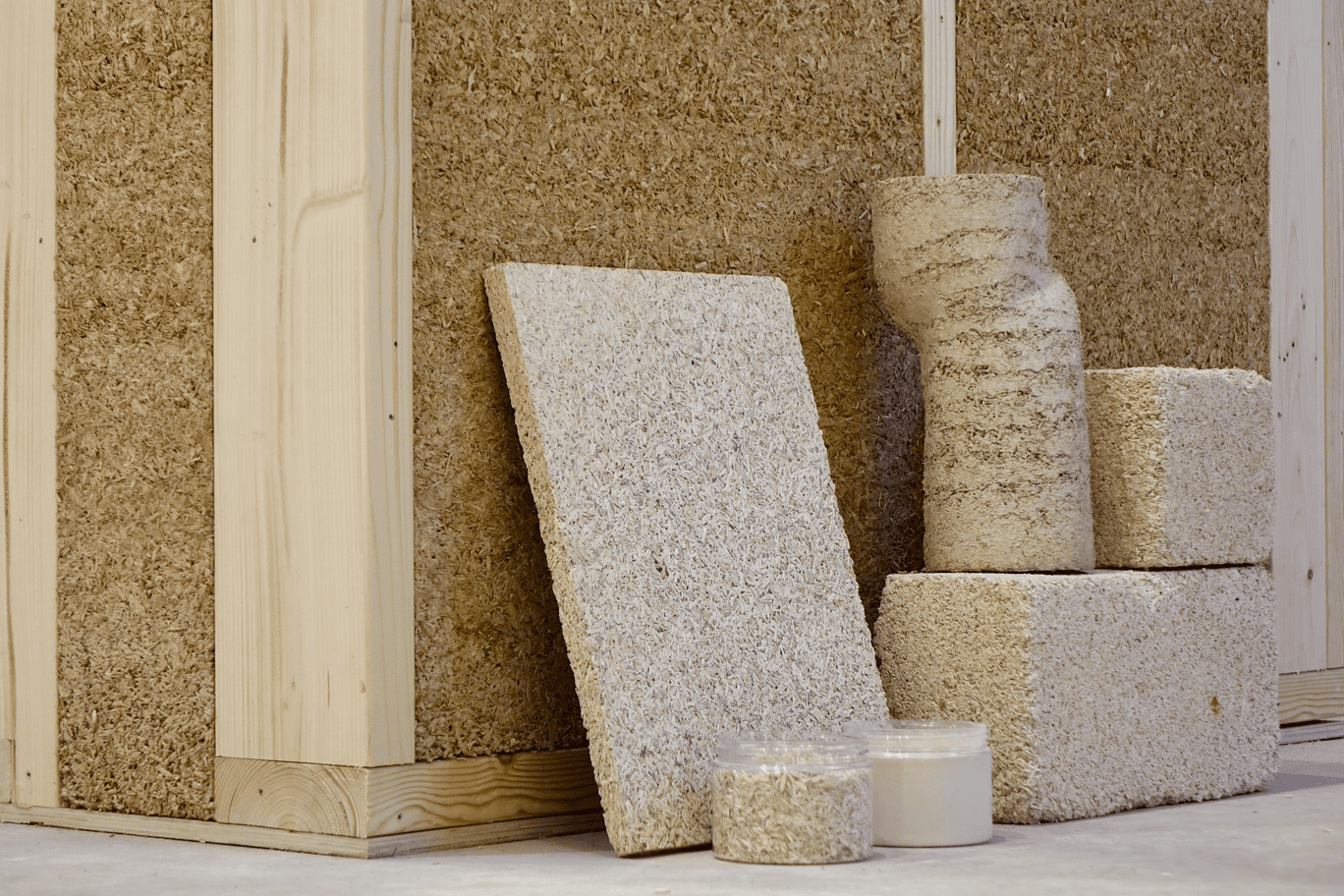
My experience on various projects has repeatedly shown the practical benefits of Eco-Friendly Building Materials (Hempcrete, Timber-crete). Hempcrete, for instance, is a mix of hemp hurds, lime binder, and water. It’s not a structural material itself. Instead, it forms an insulating, vapor-permeable infill for walls, roofs, and floors. Its breathability helps regulate indoor humidity, which significantly reduces mold and mildew risk. We’ve used it extensively in residential buildings where occupants report superior thermal comfort and air quality.
Timber-crete, on the other hand, combines recycled wood particles with cement. This creates a denser, more structural block or panel. It offers good thermal mass, contributing to stable indoor temperatures. While less common in the US than in other parts of the world, its use is slowly expanding. Both materials require specific application techniques. Proper training for builders is essential to ensure optimal performance. They are not simply drop-in replacements for every traditional material, but they offer compelling advantages in specific applications.
Timber-crete’s Role in Sustainable Structures
While less widely known than hempcrete, Timber-crete plays an important role in the sustainable building spectrum. It reclaims wood waste, diverting it from landfills. This material can form load-bearing walls, providing both structure and insulation. We have worked with Timber-crete on a small scale, recognizing its potential for modular construction. Its dense composition means excellent sound insulation properties. This is a valuable attribute for urban developments or multi-family dwellings.
The manufacturing process for Timber-crete generally involves less energy than traditional concrete. This further reduces its environmental footprint. However, securing a consistent supply of high-quality Timber-crete blocks can be a challenge, particularly in regions where the industry is nascent. For projects aiming for robust, long-lasting structures with good thermal performance and waste reduction, Timber-crete presents a compelling argument. Its ability to sequester carbon within the built environment is another significant ecological benefit.
Real-World Application of Eco-Friendly Building Materials (Hempcrete, Timber-crete)
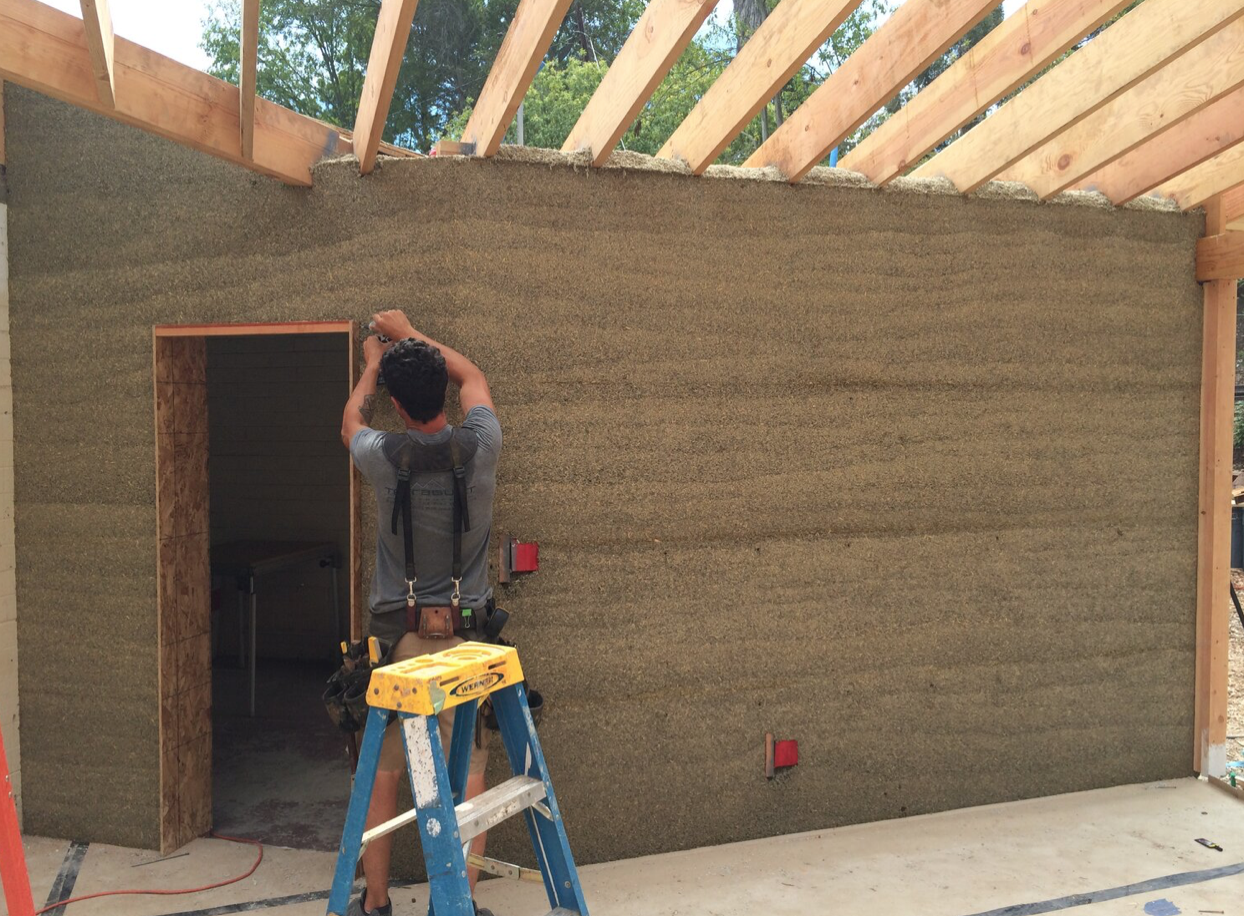
Our firm’s journey with Eco-Friendly Building Materials (Hempcrete, Timber-crete) began with a series of small residential builds. These early projects served as vital learning grounds. We started with hempcrete, casting it into wall forms for a single-family home. The lightweight nature of the material simplified handling. However, the curing time required careful project scheduling. We quickly learned the importance of proper ventilation during the initial drying phases. This ensures the material performs as intended.
For a community center project, we explored using Timber-crete blocks for internal partition walls. This choice provided excellent acoustic separation between rooms. It also contributed to the building’s overall sustainability goals. These projects demonstrate that these materials are not merely experimental. They are viable, functional solutions. Their integration into mainstream construction depends largely on continued education and demonstrating their cost-effectiveness over the building’s lifecycle. Many owners appreciate the improved energy efficiency and healthier indoor environment these materials create.
Addressing Challenges in Adopting Eco-Friendly Building Materials (Hempcrete, Timber-crete)
Integrating Eco-Friendly Building Materials (Hempcrete, Timber-crete) is not without its hurdles. One primary concern is often the initial material cost. While lifecycle costs often prove favorable due to energy savings, the upfront investment can be higher than conventional options. Supply chain logistics also present difficulties. Sourcing large quantities of hemp hurds or certified Timber-crete can be challenging outside established markets. This issue particularly affects availability in some parts of the US.
Regulatory acceptance is another significant factor. Building codes are gradually adapting, but local interpretations can vary. This sometimes leads to delays or additional approvals. Educating building inspectors and contractors is crucial to smooth project execution. Despite these challenges, the long-term benefits typically outweigh the initial difficulties. These include reduced energy bills, lower maintenance, and a healthier living or working environment. We often work closely with clients to project these savings and benefits, making a stronger case for these sustainable choices.


